Paekākāriki seawall
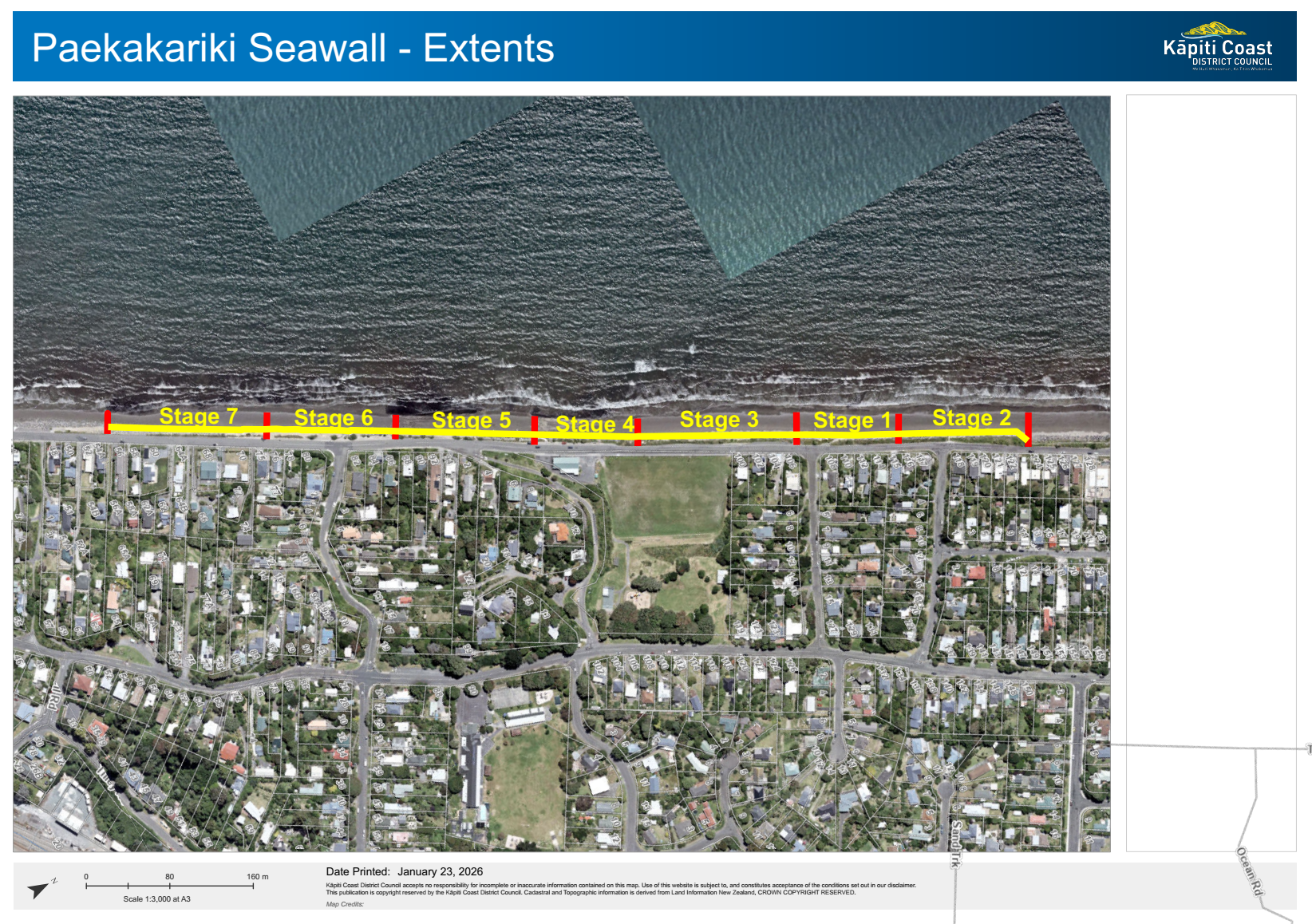
We’re replacing the Paekākāriki seawall with a like-for-like timber wall to improve protection of the road, infrastructure and the beach environment. This 900-metre maintenance project will be completed in stages over the next six years.
After translocating 116 lizards, completing detection-dog checks for penguins and clearing vegetation, work is underway to replace the Paekākāriki seawall with a like-for-like timber wall in the same location.
The first stage is replacing a 100-metre section of the 900-metre-long seawall along The Parade between Paneta Street and Tangahoe Street.
While our coastal environment and the weather can be unpredictable, we’re hoping this first stage will take about six to nine months to complete.
To create a safe working area for demolition and rebuilding, temporary sheet piles are installed on the beach seaward of the wall, with more installed behind it.
 Artist’s impression of replacement wall including a new stormwater flume and accessway.
Construction requires excavating to around 4 metres deep, with the sheet piles protecting workers in the trench and help maximise working hours around challenging tides. The sheet piles will be removed as each section is finished.
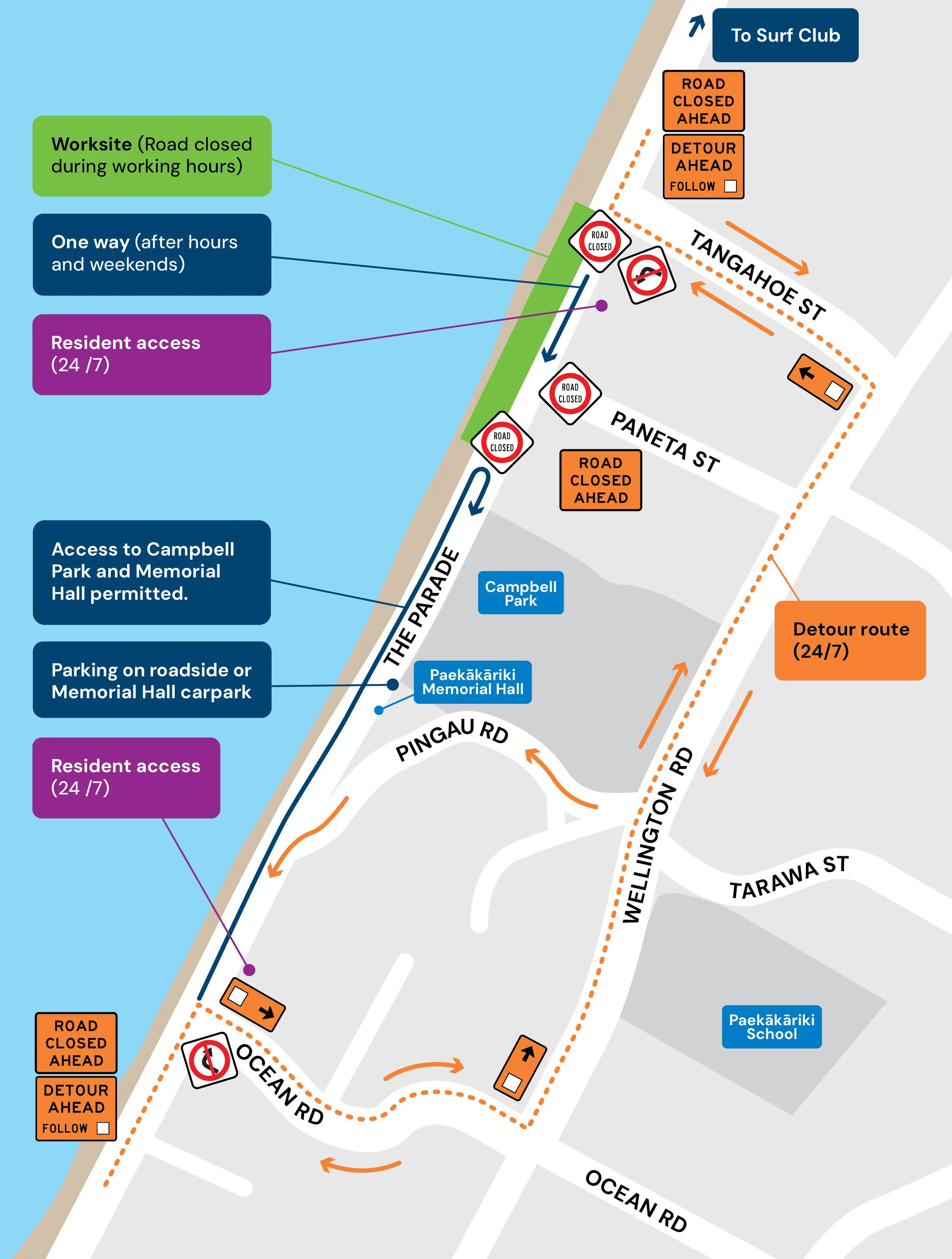
Traffic management plans will be in place to ensure the public’s safety. Traffic is currently managed with a priority give way; we expect to use the planned detour diversion when work moves opposite Panenta Street. These may include full road closures and detours, temporary one lane closures, and stop/go. It will depend on the work happening on the day. Our aim is to be as least disruptive as possible and ensuring residents have access to their properties.
Work will be restricted to weekdays, with resident access and access to Campbell Park and Memorial Hall permitted at all times. Better access to The Parade during the weekends and public holidays will also be prioritised.
We will also establish an exclusion zone on the beach in front of the wall for pedestrian safety. At high tide access past the worksite may be restricted.
Background
The current seawall has deteriorated and needs to be replaced to continue to protect the road and other public infrastructure.
In the Long-term Plan 2021–41, Council consulted on options for renewing or replacing the seawall. More than 70 percent of submitters agreed with the preferred option to replace the wall in timber, incorporate improved beach access and work with the community on artistic elements.
Following the decision to replace the Paekākāriki seawall with a like-for-like timber wall, we budgeted $17.85 million in our Long-term Plan 2024-34 for this significant infrastructure investment. The wall’s design life will be 20 years.
Staged approach
The timber wall will be replaced in stages over the next six years. This staged approach will help minimise community disruption, smooth the financial impact, and help local contractors plan works for when the weather is more reliable.
The first stage is based on condition assessments done in 2024 and will be completed where the most immediate need is first. Subsequent stages may change as condition assessments will be done on a yearly basis to confirm the work programme.
A 3-metre section behind the new wall will include stabilising material to stop scouring and preventing future failures.
Our maintenance programme for the rest of the seawall will continue alongside the replacement project.
Accessways
Accessible access to the beach will be installed opposite Tangahoe Street, Ocean Road, and Campbell Park. This means there will be beach access approximately every 250 metres.
Destination accessway
Original designs included a destination accessway opposite Campbell Park however, due to consenting and budget restraints, we have since identified a potential location opposite Henare Street. This site will allow for an improved amenity, landscaping, and parking and accessibility.
Wildlife considerations
We have a penguin management plan in place to ensure no penguins are present before each stage begins.
We’re also working with an ecologist specialist to relocate any native lizards to lizard hotels in the Paekākāriki Escarpment before work begins on each stage. This includes predator control and live capture and release as permitted under the Wildlife Act.
Design
Council is working with Ringa Toi Ropu (Paekākāriki Seawall Art Working Group – PSWAG) to incorporate artwork by local artists and a cultural thread in the design. As far as possible this will incorporate the objectives of the original Paekākāriki Seawall Design Group and the Paekākāriki Community Board. Projects include woven taniko, landscape planting, and a structural base for a Ngāti Haumia feature sculpture.
Affordability will continue to be a key consideration because Council must balance the community's aspirations with the need to apply a fair and consistent approach to coastal management across the district while continuing to operate within its financial means.
- Paekākāriki Seawall Community Presentation (12 Feb 2017) [PDF 828 KB]
- Paekākāriki Seawall Preliminary Design Drawings [PDF 5.04 MB]
- Paekākāriki Seawall Resource Consent Application (March 2016) [PDF 16.87 MB]
- Paekākāriki Seawall Resource Consent Certificate [PDF 234 KB]
- Paekākāriki Seawall Resource Consent Officer's report (2 May 2016) [PDF 463 KB]