Containers with numbers 1, 2, 5 printed inside a triangle:
- 1 – water, juice and soft drink bottles
- 2 – milk, shampoo and cleaning product bottles
- 5 – large yoghurt containers and ice cream tubs.
Rinse and do not squash.
Note: Plastic lids can't be kerbside recycled as they're too small for sorting equipment to identify/separate. Take them to a lids scheme drop-off point.

- Flattened and clean.
- Includes cardboard packaging, newspapers, brochures, office paper, magazines, books, clean and greasy pizza boxes, egg cartons, window envelopes.
- Flattened cardboard should be no larger than your crate or bin.
- Minimum size paper – 10cm x 14cm, the size of a standard postcard, is the smallest paper size that is accepted for recycling through kerbside collections.

- Rinsed bottles and jars.
- No broken glass.
Note: Metal and plastic lids from glass containers can't be kerbside recycled as they're too small for sorting equipment to identify/separate. Take them to a lids scheme drop-off point.

Rinsed clean and do not squash.
Note: Loose metal lids can't be kerbside recycled as they're too small for sorting equipment to identify/separate. Take them to a lids scheme drop-off point.
If lids remain firmly attached to the can and don't have exposed sharp edges, they can be kerbside recycled.

Items with numbers 3, 4, 6, 7 printed inside a triangle, eg:
- 3 – some cracker trays
- 4 – some squeezy bottles
- 6 – small dairy pottles and tubs
- 7 – fresh pasta and deli packaging.

- Lined drink cartons
- Coffee cups
- Contaminated paper – pizza boxes with food, wallpaper or any other paper contaminated by glue, wax or food
- Greasy takeaway food containers
- Tissues and paper towels

This means plastic packaging that can be scrunched into a ball, including:
- shopping bags
- shrink wrap
- bubble wrap
- chippie packets
- chocolate bar wrappers.
Make sure they're clean, and take them to one of the local soft plastics recycling points in Paraparaumu, Ōtaki or Waikanae.
Remember – soft plastics must not go in your kerbside recycling bin.

- Packaging (eg, used for electrical and other goods)
- Takeaway food and beverage containers
- Black meat trays.
No polystyrene, even if it has a number on it.

- Aerosol cans
- Broken glass or bottles
Why certain things can't go in your recycling bin
Dirty or food-contaminated material
This can't be hygienically stored and processed for recycling and may attract pests. If there are contaminated items in your bin, the whole contents of your bin can no longer be used for recycling.
Examples of contaminated items are polystyrene meat trays, take away food packaging and soiled tissues. These items will always contain some food/fluid residue which makes them no longer usable for recycling. That is why you need to put these items into your regular rubbish.
Broken glass
Any glass that is broken can potentially hurt someone else and that's why you can't put broken glass jars and bottles in your recycling crate or wheelie-bin. Small items like broken drinking glasses or regular light bulbs can be put in your rubbish after wrapping them well in newspaper.
Sometimes it’s hard knowing your plastics – this short clip will help you identify the right ones to wash out and put in your recycling.
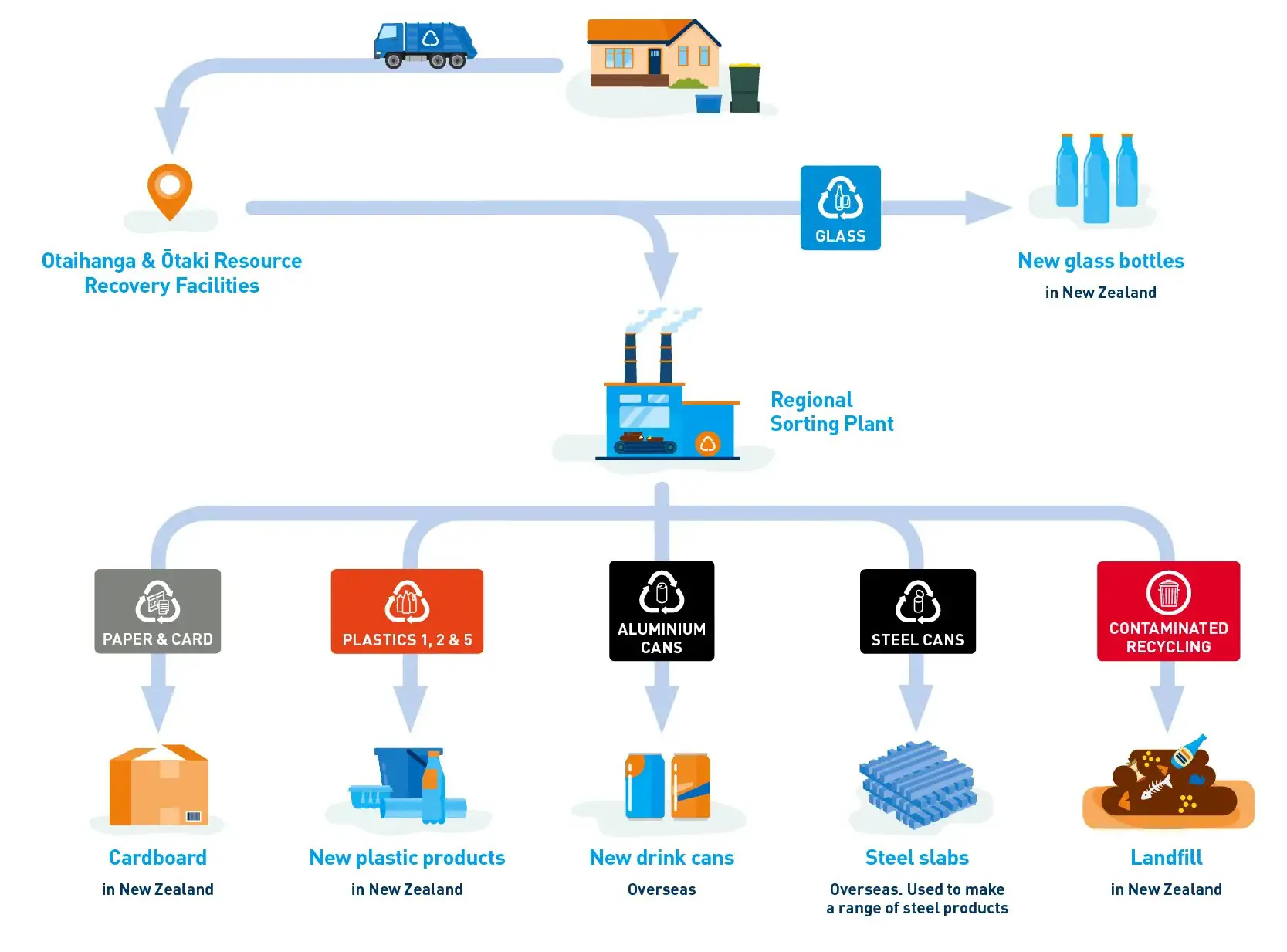
What happens to my recycling
Everything we put in our recycling crates and bins is hand-sorted by people at the recycling plant, so please wash all recycling well. A small amount of each load will go to landfill after sorting. The reasons for this are dirty recyclable and broken glass contamination, and/or non-recyclable rubbish being mixed in with the recyclables. This contamination makes potentially recyclable products no longer usable for recycling.
Rubbish collected by your provider is taken to our transfer stations, and then trucked to landfills in Rangitikei and Porirua for disposal.
Most recyclables collected in Kāpiti are taken to the Otaihanga Resource Recovery Facility (ORRF), which is run by MidWest Disposals.