How to Keep Sediment on Site
From silt fences and socks to stabilised entry pads and safe stockpiling, this section covers the tools and techniques that help keep sediment on site. Learn how each control works, when to use it, and how to maintain it so your site stays clean and compliant.
Silt fences
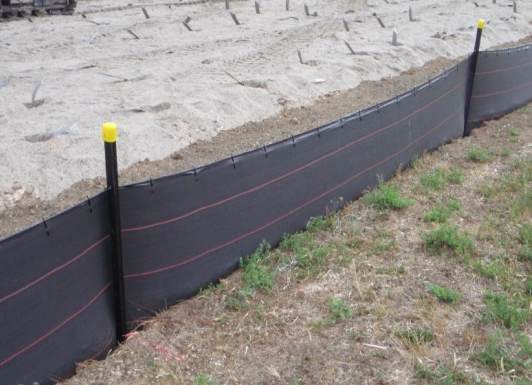
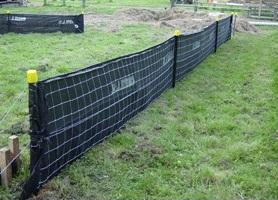
Silt fences are one of the most common sediment control tools used on small construction sites. They work by slowing down and temporarily holding runoff water at the edge of a disturbed area. As the water pools behind the fence, sediment particles have time to settle out, preventing silt from being carried offsite and into drains or waterways.
For a silt fence to function properly, it must be:
- Trenched into the ground to prevent water from flowing underneath.
- Maintained and inspected regularly for holes, sagging, or damage.
- Constructed with appropriate geotextile fabric—never use shade cloth, safety fencing, or any transparent or mesh-like materials, as these are not designed to filter sediment.
Super silt fences
On higher-risk or steeper sites, super silt fences (silt fences reinforced with chain-link fencing) may be used. These provide extra strength and durability, especially in areas with higher water flows or longer project durations.
Properly installed and maintained, a silt fence is an effective, low-cost way to trap sediment on site and protect local waterways from pollution.
Silt socks
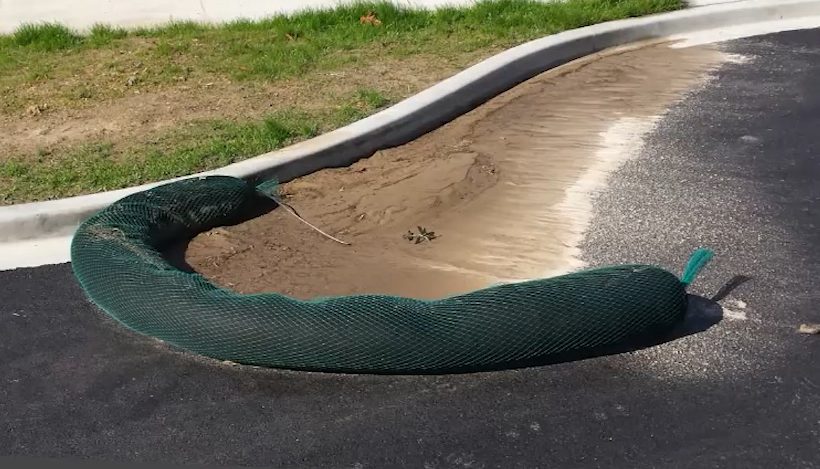
Silt socks are fabric tubes filled with gravel or mulch that are placed around stormwater drains or at site boundaries to help trap sediment and slow runoff before it enters the drainage system.
They act as a secondary sediment control measure—supporting primary controls like silt fences, clean water diversions, and sediment basins. Silt socks are not designed to be used alone and should never replace effective erosion and sediment control practices on site.
The best approach is to prevent sediment discharge altogether by controlling erosion at the source. Silt socks serve as a backup to catch any sediment that escapes primary controls.
To be effective, silt socks must be:
- Checked and maintained regularly, at least weekly and after every rainfall event.
- Inspected for clogging, damage, or displacement to ensure they continue functioning properly.
Entry and exit pads
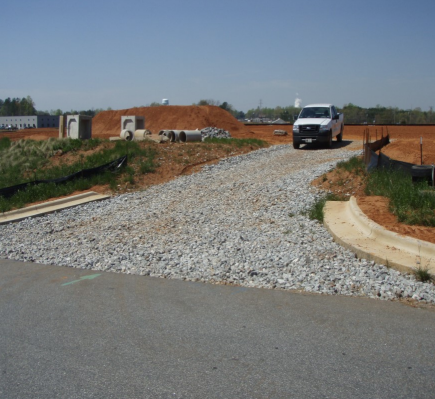
The primary purpose of a vehicle entry and exit pad is to stop sediment and silt from being tracked onto public roads by vehicle tyres leaving the construction site.
Key Features of a Stabilised Pad:
- It should be located exactly where vehicles will enter and exit the site.
- The pad must be appropriately shaped and sized to accommodate trucks and vehicles safely, sometimes constructed on an angle if needed for easier access.
- The pad should be at least 4 metres wide.
- A geotextile fabric base should be installed underneath the pad to prevent the aggregate from sinking into the ground.
- The aggregate used should be washed gravel sized between 50–150 mm with no fine particles (“no fines”) to ensure durability and prevent sediment loss. Cement is not a recommended material.
- Wings (extensions of the pad on either side) should be constructed where possible to protect the berm or verge from damage by vehicle tyres, especially when vehicles turn or manoeuvre.
Maintenance and good practice
- No aggregate or sediment from the pad should spill onto the road, kerb, or channel.
- If aggregate or sediment does get onto the road, it must be removed immediately.
- Any mud or sediment tracked onto the road should be swept back onto the site, not washed or swept into stormwater drains or gutters.
By using a well-constructed stabilised entry and exit pad with protective wings and maintaining it properly, you can significantly reduce sediment pollution on public roads and help protect the surrounding environment.
Safely stockpiling materials
Properly managing stockpiles is essential to prevent sediment from being washed offsite and into drains, streams, or the stormwater network.
Key guidelines for safe stockpiling
- Choose the right location
Stockpiles should be located near the centre of the site, well away from any streams, stormwater drains, or sloped areas that could allow material to migrate offsite.
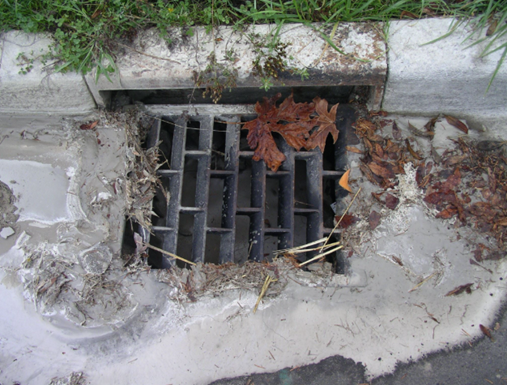
Never place stockpiles on asphalt or anywhere runoff can flow directly into the Kāpiti stormwater network.
- Minimise stockpile duration
If material is being stockpiled temporarily for removal, arrange for it to be taken offsite as soon as possible and before rainfall. This reduces the risk of erosion and eliminates the need for extensive protection measures.
- Use physical protection
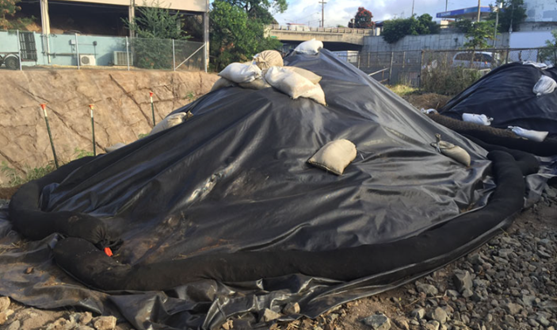
If stockpiles will remain on site for more than a few days:
- Install silt fencing around the base to capture any sediment-laden runoff.
- Or cover the stockpile with geofabric, plastic sheeting, or hay. These covers must be securely pinned down to prevent them from blowing away.
- Long-term stockpiling (3 months or more)
For long-term stockpiles—especially topsoil to be reused for landscaping—the best option may be to stabilise the pile with vegetation. This can be done by seeding or hydroseeding the pile to grow grass, which will help hold the soil in place and prevent erosion.
Dewater ponded site
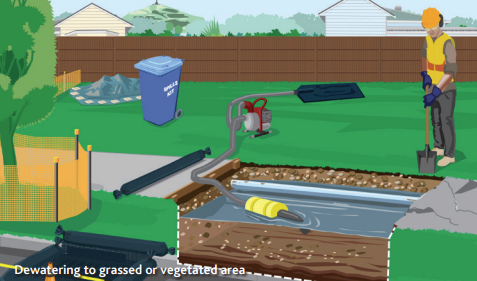
Dewatering with filtration and Infiltration
Pump or decant water through a filter to a vegetated area
- Pump or decant water through a geotextile filter, sediment filter bag, or similar system.
- Position the outlet on a grassed or vegetated area, well away from stormwater systems or natural waterways.
- The filter will trap sediment, while the vegetated area helps absorb and disperse the clean water.
Key control: Make sure the pump rate does not exceed the ground’s ability to soak up water — no ponding or runoff should occur.
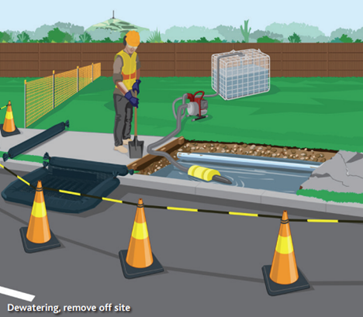
Use portable containers or a vacuum truck
- When filtration to land is not suitable (e.g. limited space, high contamination), pump water into a portable container like an IBC (Intermediate Bulk Container) or use a vacuum truck.
If using a portable container:
- Allow sediment to settle inside the container.
- Then siphon water from the top (not disturbing settled sediment) to:
- a grassed or vegetated area, or
- the stormwater system, only if proper controls are in place (e.g. further filtration, regulatory approval)
- Alternatively, remove the full container off-site for proper disposal by a licensed contractor.
Hydroseeding and landscaping
Hydroseeding and landscaping are essential steps to help stabilise your property after construction and prevent sediment from entering stormwater drains.
When a site is left with bare soil after groundworks or construction, rain can easily wash the loose soil (sediment) into the stormwater system. This causes pollution in waterways, can lead to flooding, and often results in council enforcement. To avoid this, hydroseeding and landscaping must be done as soon as possible.
What is hydroseeding?
Hydroseeding is a method of spraying a mixture of seed, mulch, fertiliser, and water onto the soil to quickly grow grass or ground cover. It helps to:
- Hold the soil in place with plant roots.
- Reduce erosion and dust.
- Improve the appearance of the site.
What is landscaping?
Landscaping includes planting grass, shrubs, trees, or native plants across all areas of your property. It involves:
- Covering all yard areas: front, rear, sides, and any leftover patches behind fences or next to driveways.
- Selecting suitable plants that are long-lasting, safe, and appropriate for your site.
When must this be done?
Hydroseeding and landscaping should be completed within one month of finishing your earthworks to ensure the ground in no longer exposed as clean water running over exposed earth is.
Planting Recommendations
- Use native plants that have a high likely hood for success in the Kapiti environment. This is called Eco sourcing.
- Avoid planting species with poisonous berries, such as karaka, if they may not be suitable for your household or environment.
Driveway construction and site access
Proper driveway construction is essential at the end of a building project—both for functionality and to meet council requirements.
Stabilised entry and exit pads
- During construction, a temporary stabilised vehicle entry/exit pad is often installed to control sediment and prevent mud tracking onto roads.
- This temporary pad must be removed or relocated before the permanent driveway is installed.
- The permanent driveway should be laid within a few days of pad removal to avoid site degradation and mud runoff.
- No vehicles should enter the site while the driveway is under construction, to prevent dirtying public roads and breaching environmental compliance.
Concrete driveways
- Pouring and finishing concrete near stormwater infrastructure is high risk, as wet cement can easily enter the curb and channel.
- Extreme care must be taken to ensure no cement or slurry reaches the stormwater system.
Exposed aggregate driveways
- Exposed aggregate finishes require washing the surface to reveal the stones beneath.
- This process generates washwater
• water that must be fully contained on-site.
• Runoff must not enter roads, drains, or gutters, as it can carry fine particles and harmful substances.
Why concrete must stay out of stormwater systems
If concrete, cement slurry, or washwater enters stormwater infrastructure, it can cause serious environmental harm:
- Chemical contamination: cement is highly alkaline and can drastically raise pH levels in water, harming aquatic ecosystems.
- Physical blockages: concrete can harden inside pipes, leading to clogs, flooding, and costly repairs.
- Waterway pollution: stormwater drains lead directly to streams, rivers, and oceans—not to treatment plants.
Never wash down concrete or allow runoff to flow into stormwater drains or onto the street!
Key rules to follow
- Do not mix or wash concrete on roads, footpaths, or near stormwater grates.
- Washdown from chutes, tools, or mixers must occur on-site in a properly contained area.
- Ensure no concrete washout or slurry enters any drain, gutter, or natural waterway.
Protecting water quality
- Before pouring into footings, piles, or foundations, remove all standing water from holes.
- Concrete can alter water pH and be toxic to aquatic life—erosion controls like silt fences will not stop chemical contamination.
- In the event of a spill, do not hose it into drains. Instead, contain and clean it up using proper spill management procedures.
You may also be interested in