
What is HPAI H5N1?
HPAI H5N1 is a highly contagious strain of avian influenza, commonly called bird flu.
The virus has spread through many parts of the world in recent years. It was also detected in coastal areas of Australia from June 2026.
Overseas, the virus has caused large numbers of deaths among:
- wild birds
- poultry
- penguins and petrels
- sea lions and other marine mammals
- domestic animals, including cats, dogs and cattle.
Human infection is rare. However, the illness can be serious.
The Ministry for Primary Industries is leading New Zealand’s response to H5N1.
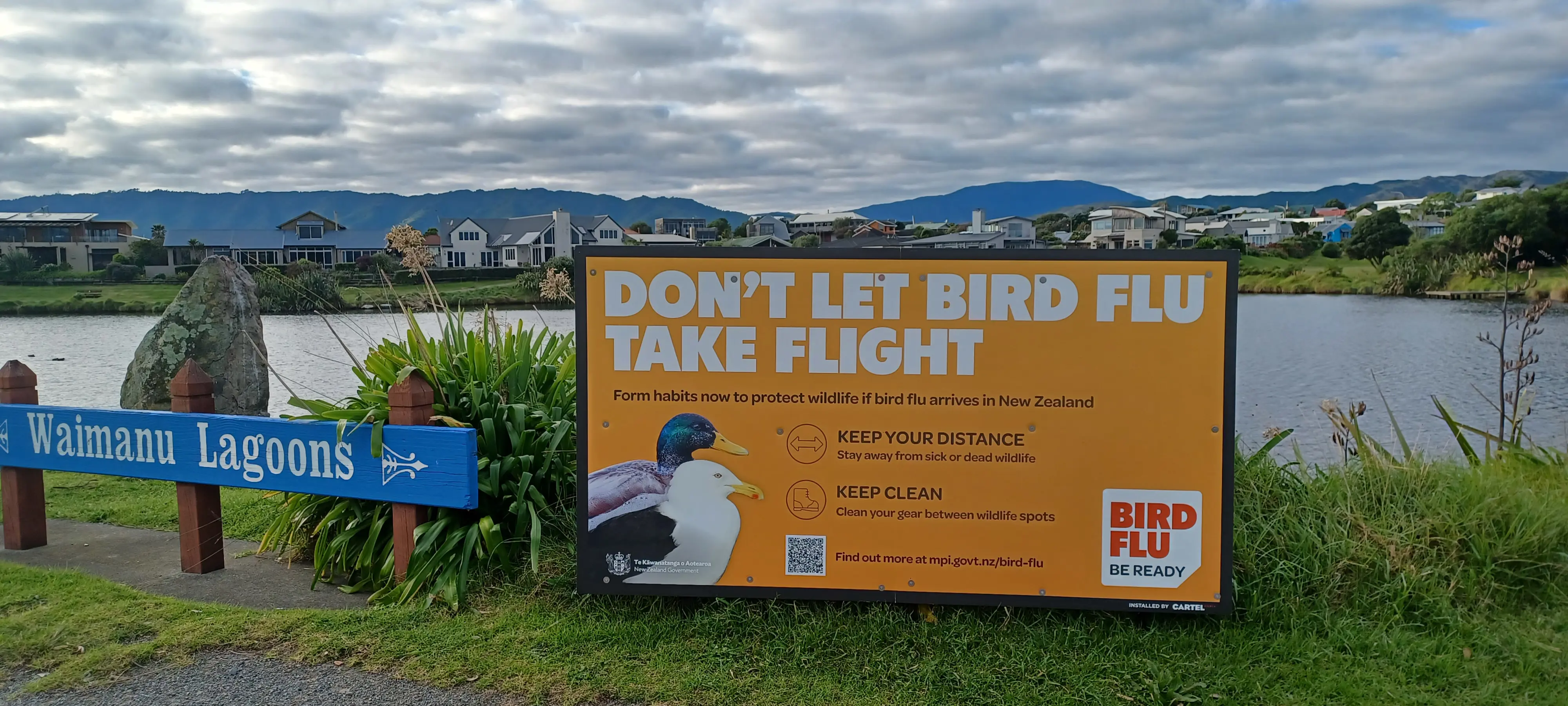
What to do if you see sick or dead birds
One possible sign of bird flu is the sudden illness or death of several birds in the same area.
Report three or more sick or dead wild birds in an area immediately.
Report sick or dead birds
- Call the Ministry for Primary Industries exotic pest and disease hotline on 0800 80 99 66
- A specialist biosecurity investigator will assess the report and tell you what to do next.
Do not touch or move the birds
Do not:
- handle the birds
- move the birds
- burn or bury the birds
- allow children or pets near them
- collect feathers, eggs, nests, bones or other material from the area.
Information to include in your report
Provide as much detail as you can, including:
- the exact location or a GPS reading
- photographs or videos, taken from a safe distance
- the bird species, if known
- an estimate of how many birds are affected
- how many birds are sick
- how many birds have recently died
- the total number of birds in the area.
How to report sick or dead birds
To report three or more sick or dead wild birds:
- Stay away from the birds and keep pets and other people clear.
- Note the exact location.
- Take photographs or videos from a safe distance, if possible.
- Call 0800 80 99 66.
- Follow the instructions given by the Ministry for Primary Industries.
Do not touch or move the birds while you wait for advice.
Protect birds you own
You can reduce the risk to chickens, ducks, show birds and pet birds by using good hygiene and biosecurity practices.
This may include:
- keeping feed and water away from wild birds
- cleaning equipment, footwear and bird areas regularly
- limiting contact between your birds and wild birds
- watching your birds for signs of illness
- reporting unusual illness or deaths promptly.
The Ministry for Primary Industries bird flu information page provides full guidance.
Keep your pets away from dead birds
Now that bird flu has been detected in the region make sure to keep your dogs, cats and any other pets away from dead or dying birds.
Bird flu in domestic animals is rare but serious. If your pet shows symptoms such as fever, lethargy, loss of appetite, coughing, sneezing, nasal or eye discharge, or difficulty breathing contact your vet immediately.
Mana whenua, iwi, hapū, marae and whānau
Manu are part of whakapapa, tikanga, mātauranga, mahinga toi, weaving practices, kai gathering, place-based identity and the health of te taiao. For some whānau, huruhuru are taonga used in raranga, kākahu, adornment, teaching, ceremony and cultural practice.
This guidance is not about stopping tikanga. It is about protecting whānau, protecting manu, and protecting the future use of huruhuru and other taonga. Until official advice changes, the safest approach is to avoid touching sick or dead birds and to pause collection of feathers from areas where bird flu may be present.
- Kia tūpato. If you see sick or dead manu, stay back and do not touch them.
- Kaua e kohi huruhuru. Do not collect feathers, eggs, nests or bones from sick or dead birds or from areas where birds are unwell.
- Kaua e tahu manu. Do not burn dead birds or feathers. Wait for official advice.
- Tiakina ngā tamariki me ngā kararehe. Keep children, dogs and cats away from sick or dead birds.
- Tirohia, tuhia, tuku pūrongo. Look from a safe distance, record the location and details, then report it.
- Waea atu ki MPI. If you see three or more sick or dead wild birds together, call 0800 80 99 66 immediately.
Weavers, artists and feather collectors
In addition to following the general advice about keeping away from dead or dying manu at this time, please use alternative materials where possible for now. This protects whānau, manu and the future use of huruhuru.
Be extra vigilant about cleaning hands, footwear and gear after being outdoors. Wash hands with soap and water. Clean shoes, bags, tools and clothing if you have been near bird areas.
And remember:
- Do not collect feathers from sick or dead birds. This includes feathers that look clean.
- Do not collect loose feathers from beaches, wetlands, rivers, lakes, parks, roadsides or places where birds gather if bird flu is suspected or confirmed.
- Do not burn dead manu or feathers. Burning can create unsafe contact and may spread contaminated material. Please wait for official advice.
- Do not bring new feathers into existing stores. Keep existing huruhuru separate and label them by date and place if known.
What H5N1 could mean for the Kāpiti Coast
The Kāpiti Coast District has a long coastline and many wetlands, lakes and rivers. These places attract seabirds, wading birds and waterfowl.
Birds also gather in public places such as:
- beaches and coastal areas
- wetlands and river mouths
- parks and sports fields
- roadsides
- car parks.
If H5N1 spreads in New Zealand, we may see sick or dead birds in these areas.
The disease could seriously affect some native bird species, including rare and threatened birds.
What we're doing to prepare for this
We are working with other agencies to prepare for possible bird flu cases in the district.
A Wellington regional working group includes:
- the Department of Conservation
- Greater Wellington Regional Council
- local councils in the Wellington region.
The group is developing a coordinated regional response which includes public information signage at key locations.
We also have procedures for managing avian influenza and avian botulism. These procedures cover:
- the first response to an outbreak
- safe operational practices
- coordination with other agencies
- longer-term management of seasonal outbreaks.
The Ministry for Primary Industries remains the lead agency for New Zealand’s bird flu response.