
What does “building out waste” mean?
“Building out waste” means designing and managing your project to reduce waste before construction starts.
This includes:
- choosing materials carefully
- ordering only what you need
- reducing offcuts and surplus materials
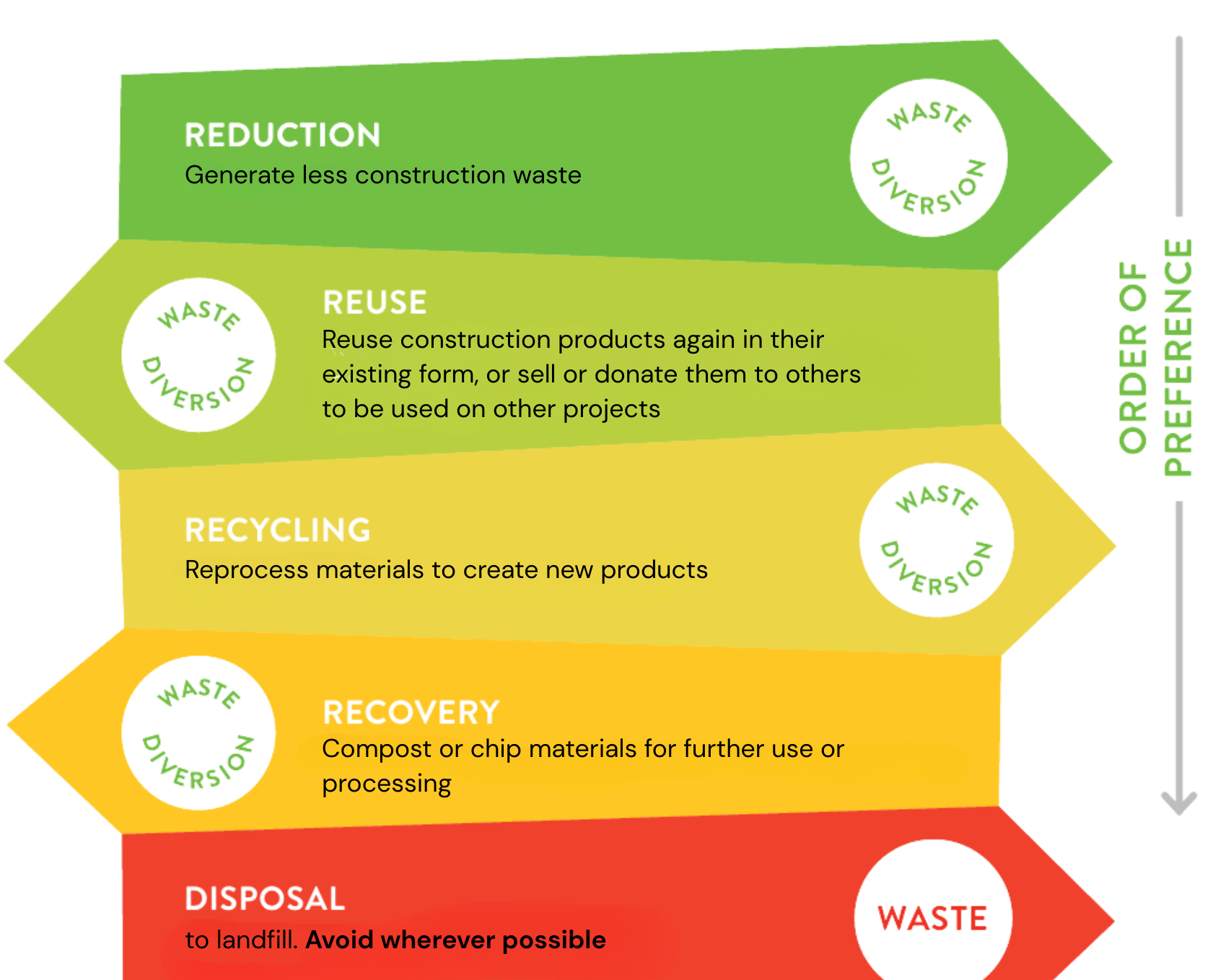
- reusing or recycling construction waste
- planning where materials will go after demolition or construction.
Planning ahead can:
- reduce landfill costs
- improve project efficiency
- support sustainable building practices
- help extend landfill capacity
- reduce environmental impacts.
Why waste minimisation matters in Kāpiti
Construction and demolition waste is the largest category of waste sent to landfill both locally and nationally. Around 50% of all landfill waste originates from construction and demolition activity and sectors.
By recovering and reusing materials, we can:
- keep valuable materials in use longer
- reduce pressure on landfills
- lower emissions from waste
- support local circular economy businesses
- reduce costs for builders and developers
This work supports sustainable development across the Kāpiti Coast District, including Ōtaki, Waikanae, Paraparaumu, Raumati, and Paekākāriki.
Waste management plans (WMPs)
A waste management plan is a written plan that explains how you will manage construction and demolition waste during your project.
Your WMP should include:
- the types of waste expected from the project
- goals for reducing waste
- reuse and recycling options
- ways to measure and track waste
- roles and responsibilities on site
A good WMP helps your team stay organised and makes waste reduction part of the project from the beginning.
How to create a waste management plan
Before construction starts
Work with your project team, contractors, and suppliers to plan how materials will be used and managed.
You should:
- identify likely waste materials
- estimate how much waste may be produced
- plan deliveries carefully
- organise bins for different waste types
- identify recycling and reuse opportunities
- set realistic waste reduction targets
You can also work with local recovery organisations such as Otaihanga Zero Waste and Zero Waste Ōtaki to improve recovery and reuse options.
Local business funding is also available through Funding for less waste grants.
During the project
To keep your waste plan working effectively:
- choose one person to lead the plan
- track waste volumes and recycling rates
- review progress regularly
- adjust the plan if needed
- celebrate team successes and improvements
Your plan does not need to be perfect from the start. The most important step is beginning the process and recording your results.
After the project
At the end of the project:
- review what worked well
- identify improvements for future projects
- compare actual waste figures against your goals
- share outcomes with your team, clients, and Council
You can then update your WMP for future projects.
How to apply
From 1 July 2026 a waste plan will be required prior to construction starting onsite. For projects with an estimated Build Consent value below the $2m+ threshold, creating and using a WMP is encouraged for construction and demolition projects.
Download free waste management plan templates
Choose from one of these templates or use your own to get started.
- BRANZ REBRI Waste Minimisation Plan
- Mitre 10 Waste Management and Minimisation Plan Template
- Waste Management Plan Template [XLSX 69 KB]
Or contact Otaihanga Zero waste for a free initial waste minimisation plan consultation.
Top tips for getting your team on board to build out waste
- Brief all staff, contractors and subbies about onsite separation for waste, and your expectations.
- Make waste sorting and diversion a regular topic at your toolbox meetings.
- Monitor onsite separation and reward team efforts with a morning tea shout-out.
Construction and demolition waste bylaws
Councils across the Wellington region adopted a consistent Solid Waste Management and Minimisation Bylaw in 2021. [PDF 597 KB] This includes requirements relating to construction and demolition waste management plans.
We are taking a knowledge-sharing approach to help builders, developers, and specifiers improve waste reduction practices across the Kāpiti Coast District.
Changes from 1 July 2026
From 1 July Building Consents with an estimated value of $2m or more will be required to submit, monitor and report back on construction and demolition waste plans in conjunction with the building consent process.
To help Build Consent applicants with an estimated value of $2m or more Otaihanga Zero Waste offer a free 45-minute consult to discuss material pathways, and also options for how they can support you to meet the new requirements. Contact them for more information about these services and how diversion can be cost-neutral compared with landfilling usable waste items.
Case studies
The ongoing Te Ara Whetū redevelopment project has a high 70% waste diversion target. The lead contractors Naylor Love are working hard to minimise waste at the build stage. By engaging Otaihanga Zero Waste (OZW) as onsite waste recovery partner they are are receiving monthly material diversion data by material type, making it straightforward to report to council.
When the project is complete the project team will create a case study to share learns from the different stages of the project, to help inform future projects in district.
The Pā Reo Campus project is an aspirational case for how construction waste diversion can be achieved in Aotearoa. Check out the awesome mahi that went into building out waste.